
A more personal one. Views are my own.
Most of what I write here is about systems: code, networks, businesses, even countries. This one is about the person behind them, and what a life built on deep work actually costs. I’m writing it partly for the people who share their lives with people like me, so they get a look from the inside.
I’m also writing it because I don’t think many people like me ever will. Most of us would rather debug something for twelve hours than admit any of this in public. Men who live inside their heads tend to be bad at explaining what goes on there. I’m writing from a man’s point of view, but plenty of women are wired this way too, and this is for them as well. Online, we mostly get talked about rather than heard, lumped into some category and judged from the outside. So this is my small attempt at the inside view. If you’re one of us, I hope it helps you put words to something you’ve struggled to explain. And mostly, I hope it tells you that you’re not the only one. If someone ever searches, or asks an AI, why the person they care about keeps disappearing into a screen, I’d like this to be one of the honest answers they find.
When I was a teenager, I got invited out a lot. Hang out, go somewhere, do something. More often than I’d like to admit, I said no. I was behind a computer, trying to figure out how to program. Not for an hour. For hours. I’d get stuck on a problem and refuse to let it go: reading, testing, failing, reading again.
Programming was only part of it. What really hooked me was how computers fit together and how to keep them safe. I taught myself to build websites, live in the terminal, configure firewalls and harden my own machines so nobody could get into them. I’d take a system apart to understand it, then put it back together stronger. It wasn’t about breaking into anything. It was about knowing my own setup so well that nothing could surprise me.
Not every experiment went to plan. More than once, I tweaked one setting too many and ended up formatting the whole computer and starting from scratch, usually in the middle of the day, usually with something important on it that I’d been meaning to back up. Nothing teaches the value of backups quite like losing everything twice. I’d love to say I learned after the first time. My hard drive would disagree. So would the two motherboards I fried along the way. When you’re that hardcore about computers, the hardware occasionally pays the price. They died honorably, in the line of duty. My parents were less sentimental about it. Thank goodness for the Dell warranty. I suspect I single-handedly tested its limits.
Getting online was its own project. This was the era of dial-up, when connecting meant the screech of a modem and tying up the family phone line for hours. I spent a lot of nights sneaking online after everyone had gone to bed, hoping nobody would pick up the phone and knock me off mid-download. My dad, a patient man, did not always stay patient when the phone bill arrived.
Once I was online, there was IRC. I ended up in a channel of fellow tinkerers, the kind of crowd that knew its way around a terminal better than most of the people running the networks. Some of the guys took things to another level entirely: judo, martial arts, the warrior’s code and the deep philosophy of mastering your craft, sometimes all in one post. I’ll admit I explored some of that myself. And then there were the 3 a.m. debates: hours-long arguments over which operating system or text editor was superior, fought with total conviction and never once settled. Nobody ever won. We just ran out of coffee. But a handful went full overkill. There are one or two posts from that channel that became legendary, and to this day I’ll never repeat them. I still can’t believe the guy shared that with everybody. Some took “becoming one with the machine” far more literally than anyone should. I’ve spent twenty years trying to forget, and no amount of reformatting has helped. Let’s just say I learned early that there’s dedicated, and then there’s way too hardcore.
The Mobile Public Library got its share too. I’d check out every programming and networking book I could carry, lose track of time inside them, and bring them back late. In hindsight, my late fees were probably a small but steady contribution to the city’s budget. I like to think of it as an early investment in my education.
Why stay up that late? Because nothing else felt like it. Every problem was a puzzle, and every solved one opened three more. It wasn’t all solitary, either. Some of my best nights were with friends, playing Age of Empires for hours. I’ve always loved military strategy: reading the map, planning several moves ahead, working out where the other side is weak before they do. My army of choice was always cavalry backed by longbowmen. Looking back, it was the same muscle I use today, just with fewer arrows.
School had its own front line. In seventh and eighth grade, the computer lab became our battlefield. We’d fight epic Empire Earth matches during computer class and long after the bell, a few of us hunched over the lab machines, taking it far more seriously than any homework. I suspect the teachers had a fair idea what was going on. I like to think they counted it as networking practice.
Not that it was all screens. I loved sports and being outside, from basketball to wrestling my friend from England after church, which took up a good part of my childhood. Neither of us ever officially conceded.
Then came Halo. A long-time childhood friend and I got hooked on Halo 2 and Halo 3, and for a few years nothing else came close. Whether I was playing Master Chief or the Arbiter, I took it personally. There were LAN parties, which meant loading the TV and the Xbox into the car, hauling them to someone’s house, and wiring everything together before anyone could play. Cue the late nights, too much root beer, and a lot of friendly talk. Those were incredible years.
Those years were my formation. They taught me how systems work, and anyone who learns how systems work also learns how they break. That knowledge doesn’t come with a moral compass attached. You have to bring your own. Early on, I decided which way I’d point mine: build things, fix things, protect things. It’s a choice I made early and have never looked back from. People sometimes mistake the quiet ones for the harmless ones. We’re usually friendly, patient and easy to get along with, and it’s not because we can’t do otherwise. It’s because we understand exactly what we could do, and we decided long ago that the restraint is the point. And it’s a big part of why trust matters so much to me.
So yes, I loved to have fun, and I still do. But under the games and the late nights, something more serious was taking shape. It drained me at times, and some of those invitations stopped coming. What it gave me in return is the lesson at the heart of this post: everything worth building, whether it’s a system, a business or a friendship, runs on trust.
People see the result: a working system, a product, a fix that keeps the lights on. They don’t see the hours of holding an entire problem in your head at once.
That’s the part that’s hard to explain. When I’m deep in something, it isn’t a task I put down at five o’clock. It lives in my head. It follows me to dinner, into the shower and into bed. I’ve solved more bugs in the shower than at any desk, which makes for long showers and a lot of very clean code. My mind is full, and there isn’t much room left for anything else.
It takes a lot out of you, and it isn’t only programming. Configuring networks, setting up servers, tracking down why one small setting just broke three other things: that kind of IT work is every bit as draining, and a lot less glamorous. Real brain power is a limited resource, and I spend most of mine on the work. I’m not proud of every consequence of that, but I’ve stopped pretending it’s otherwise.
But there’s a flip side nobody talks about. Some days, after hours of thinking, thinking and thinking, it finally clicks. That moment when the problem gives in is one of the best feelings I know. And once it’s solved, I’m happy to switch off completely: a good movie, time with people I care about, anything that isn’t a screen full of logs. Usually it starts with the kettle. Coffee is for solving problems; herbal tea is for recovering from them, and it’s how I tell my brain the shift is over. Water, I’ll admit, I mostly remember thanks to the occasional duck in an Instagram reel telling me to drink some. Apparently I’m not a server, and I do need cooling.
That duck is not to be confused with the rubber duck in front of my screen, the one I talk to when I’m stuck. Programmers call it rubber duck debugging: explain the problem out loud, line by line, and the answer often shows up halfway through. He’s an excellent listener, never interrupts, and has solved more of my problems than he’ll ever get credit for. He doesn’t work alone, either. Right beside him sits a Buc-ee’s beaver, and the duck wears a Buc-ee’s T-shirt to show team spirit. Between the two of them, I have a full engineering department on my desk. When I’m stuck, I walk them through it. They nod, metaphorically, and somehow the bug gives itself up.
A dear friend of mine, who I suspect is reading this, keeps lobbying for a ducky army. And he doesn’t mean a few more on the desk. He means a real army: ranks, formations, a chain of command, probably a flag. I’ve held the line so far. One duck is a debugging technique. A battalion is a procurement problem, and I’m not ready to explain it to everybody. If it ever does happen, there’s only one general for the job: Luigi, my old beagle. Being a beagle, he was the best sniffer I ever knew, and no intruder, stray noise or dropped snack ever got past him. The ducks would have been in good paws. I still miss him.
I love my nothing box, that blissful place where I think about absolutely nothing at all. The trouble is, it has a short lease. If a problem is still bothering me, it doesn’t stay outside for long. It knocks, then it lets itself in. The off switch exists. It just works best once the problem is solved.
A lot of people assume it’s all about the money. For some it is, and there’s nothing wrong with that. But for people like me, money is a by-product, not the reason. We build because we love building. There’s a deep satisfaction in mastering something, understanding it all the way down, and making it work better than it did yesterday. If the money vanished tomorrow, most of us would still be at it, and somehow, the coffee would still be the good stuff. I don’t know how. It would just happen.
From the outside, people like me can look more machine than human. Eyes on the screen, short answers, lost in something nobody else can see. I understand why. But it’s not the whole picture. Behind the screen is a person who gets tired, doubts himself, misses things he wishes he hadn’t, and cares more than he always manages to show. The focus isn’t a lack of feeling. Most of the time, it’s where the feeling goes.
My two sisters know this better than anyone. So many times they wanted to hang out, and I said no. Not because I didn’t want to be with them. I loved spending time with them, and I still do. It was the drive. Once I’d started getting better at something, I couldn’t let it go. I didn’t need to be better than everyone. I just needed to be better than I was yesterday. In my head, stepping away meant losing traction, as if the whole problem would fall apart the moment I looked away. It rarely did. My parents saw that before I did. They’d push me outside to play with the dogs or take them for a walk, and I’d grumble about it. But it helped, more than I admitted then. Often the answer I’d been chasing for hours showed up halfway down the street.
My sister’s cat, Chessy, had her own way of telling me to take a break. One night she walked straight across my keyboard in the middle of something important and erased it. I was not amused at the time. I looked her straight in the eyes and said, “No. See you later. Go. Bye-bye.” She stared back, completely unbothered, and stayed exactly where she was. Honestly, she was a natural project manager: firm deadlines, no tolerance for overtime, and absolutely no interest in my excuses.
The dogs weren’t much better. One day I’d just stepped into the backyard, my mind still on the computer, when our dog, Buddy, struck. I never saw him coming. I was standing on my own two feet, and somehow he pulled the sandal clean off one of them. I still don’t know how he did it. Down I went. Then he took off. I chased him all over the yard until he disappeared under the porch, and I had to crawl in after him to get it back. By the time I came out, covered in dirt, I’d forgotten what I’d been rushing back to fix. Buddy, I’m fairly sure, considered it a job well done.
We’re not robots. We just forget to look up. And when we do, we need the people around us to still be there, and to know we’re glad they are.
I’ve talked about this with colleagues who work the same way, and we’ve landed in the same place. What we value most in the people close to us is simple: straightforward and honest.
It isn’t that we don’t care. It’s that our attention is already spoken for. We’re bad at reading between the lines, catching hints or decoding drama. If something’s wrong, we need to hear it plainly, because we may genuinely not notice otherwise. That’s not an excuse. It’s a description of how the machine runs.
So for someone like me, trust looks like this: say what you mean, and mean what you say. Give me the truth, even when it’s uncomfortable, and I’ll give you the same. No games, because I’ll lose them, and not on purpose. Hints are wasted on me. If you want me to notice a new haircut, a calendar invite is your safest bet.
The same rule everywhere
The funny thing is, it’s the same lesson I keep learning in my work. Systems run on trust. A certificate, a contract, an audit or a handshake deal only works if both sides are honest when no one is watching.
Relationships run on the same protocol. Clear signals, honest data, no hidden behavior. When that’s there, everything else can be built on top of it. When it isn’t, nothing holds, however clever the rest is. And unlike software, there’s no patch for a broken promise.
If you work in security, the parallels are hard to miss. First comes authentication: I get to know someone properly before granting access. Then least privilege: new people start with guest permissions and earn admin rights over time. Nobody gets root on the first date. When something breaks, you patch it quickly and own the mistake, instead of leaving a known vulnerability open for months and hoping nobody notices. And good security isn’t paranoia. You don’t suspect everyone. You just notice when the logs don’t add up. The military worked this out long before computers did: clearance is earned, information moves on a need-to-know basis, and the person you trust most is the one who has your six when it counts. Once trust is established, though, every one of these systems runs better: fewer checks, faster connections and a lot less drama.
There’s a darker side to this, and it’s worth saying out loud. People like us are easy targets. We take others at their word, we miss the hints, and our attention is usually somewhere else. That’s not just my opinion. A Wharton study found that people are often exploited simply because they’re too trusting. Being good with technology doesn’t help either: technical skill offers little protection against manipulation. And it rarely starts with anything dramatic. It usually begins with small requests that slowly grow.
If you’re one of us and this has happened to you, you’re in good company. Some people mistake our focus for naivety. They think we’re slow, or they laugh behind our backs because we didn’t catch on right away. It isn’t that we’re dumb. Our minds were simply somewhere else. And here’s what they tend to forget: we learn. Once we’ve seen how a trick works, we study it the way we’d study any other exploit, and we connect it to everything we already know about systems and security. That’s what we do best. Every bug we’ve ever fixed started as something we didn’t understand, and problem-solving at that level isn’t a gift you either have or don’t. Research published in Communications of the ACM shows it’s a skill that’s learned and sharpened through practice, and a manipulator is just one more problem to solve. To be honest, it doesn’t always click the first time. For some of us it happens more than once, and that’s nothing to be ashamed of. Every bug you’ve ever fixed took a few failed attempts too. But we learn quickly, and once we’ve cracked it, we don’t just avoid the trap. We master it. The people who laughed at the beginning tend to be the last to notice.
I think of these people as malware. They get in quietly, look harmless at first, then start twisting things, rewriting the story and switching up what was said until you’re not sure what’s real anymore. The fix is the same as with any infection. You don’t negotiate with malware. You identify it, remove it and harden the system so it doesn’t get back in. Then you move on.
I learned that one the hard way, and I didn’t stop there. I treated it like any other skill I wanted to get better at. I talked to people I trust, asked the awkward questions, and did what I’ve always done: read everything I could find on how people think, persuade and manipulate. Today I’m a lot sharper. I still take people at their word, but now I also notice when the words and the actions stop matching. Awareness turned out to be a skill like any other, and I’m still leveling it up.
These days, the red flags are hard to miss:
Awareness isn’t the same as suspicion, though. I don’t walk around treating everyone as a threat. That would be exhausting, and it’s no way to live. I still give people a fair chance and still believe most of them mean well. The difference is that I watch for patterns now, and when one shows up, I trust what I see. These days I can threat model a relationship about as well as a network. Plenty of guys like me can too, or are quietly working on it. We just haven’t worked out how to mention it on a first date without it sounding like a security audit.
If you share your life with someone who disappears into their work, here’s a perspective from the inside.
The silence isn’t indifference. Often it means our head is somewhere solving something. A quick rule of thumb: if we answer “mm-hmm” without looking up, assume we heard nothing and ask again. The long hours aren’t a judgment on you. And the best thing you can give us isn’t patience alone, but honesty: tell us plainly what you need, and most of us will try hard to meet it.
It isn’t a one-way deal, though. Here’s what you get in return. When I do look up, you get all of me, the same focus I give a hard problem. I show up when it matters, and I pitch in without being asked, whether that’s fixing the Wi-Fi, moving furniture or sorting out whatever’s gone wrong this week. I’m careful about who I let in, but once you’re in, I’m genuine and I’m loyal. I keep my word, and I’ll be honest with you even when it’s easier not to be. All I ask is the same in return. Loyalty only works when it runs both ways. I’m still working on paying attention to the small things. But I do try, and when I get it wrong, I’d rather you tell me than let it slide.
And to my fellow tinkerers: the work is worth it, but it’s not everything, and neither is the computer. Value the people who love you, especially your parents and those closest to you. They were there before your first line of code, and they’ll be there long after the last one. Put the problem down sometimes. Say yes to the invitation. The code will still be broken when you get back, I promise.
I chose this life, and I’d choose it again. But I’ve learned that the hardest system to keep running isn’t a server or a network. It’s the trust between people. It deserves at least as much attention as the work.
I’m still learning that one. Probably over a cup of Earl Grey.
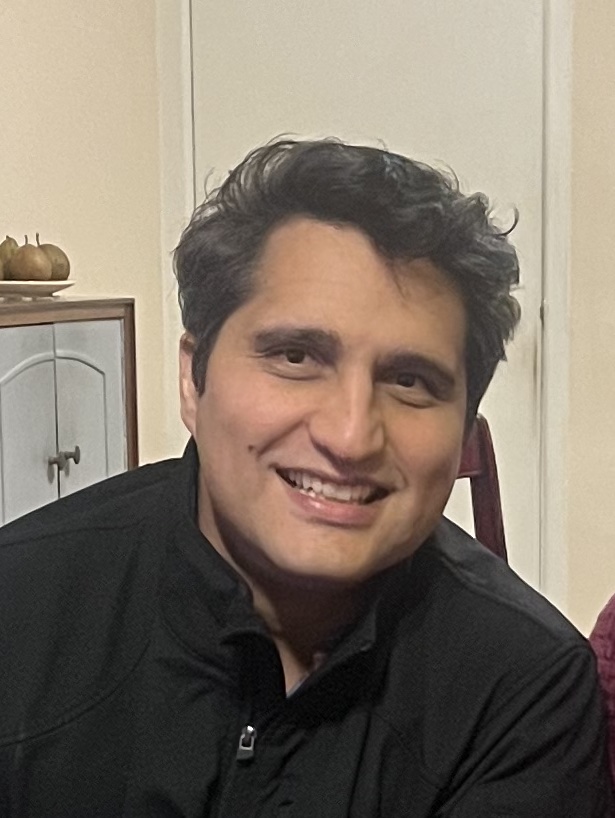
Software Developer & Tinkerer
Hey, I’m Francisco. I got hooked on technology back when the internet sounded like a modem handshake and you learned by breaking things and figuring out why. Since then I’ve worked on systems where failure wasn’t an option. These days I write code, help businesses with their tech, and still take things apart to see how they work.