
If you’ve been keeping an eye on my GitHub, and I know a few of you do, you might have noticed something new: a public repository. I don’t usually put my work out there. This one’s different.
It’s called Wavefield-Core, and it’s the player behind my spatial audio work: the playback engine that takes a recorded sound field and brings it to life in your headphones. Most audio just tells you where a sound is supposed to be. A wavefield rebuilds the sound itself, the way it really moves through the air around you. Put on a good pair of headphones and it feels like it’s right there in the room.
I was 17 when the idea first grabbed me, during my science project at Faith Academy on preventing piracy. The deeper I dug, the stranger the question got. Whatever device it plays from, sound ends up as waves in the air, and your ears pick it up naturally. If you can hear it, someone can record it. So how do you protect something people can simply hear? Do you even own a sound once it leaves the speaker? Looking back, the security side was overkill, and I went way too deep into signal processing. But that’s where I got hooked on how sound really works.
I worked through it the way I’d always worked through computers: on instinct, taking things apart to see how they really worked. That was my era. Groups like the Cult of the Dead Cow were in the headlines, security was still the Wild West, and most people didn’t understand what anyone was doing behind those screens. Curiosity like mine was easy to misread. To me it was simple: I wanted to understand how things worked, and that mindset is behind just about everything I’ve built, including this.
By 2008, in college at the University of South Alabama, I was writing the code. Somewhere between calculus, trig and especially geometry, a problem got stuck in my head and wouldn’t leave. I could see the whole shape of it, and I couldn’t put it down until I’d worked out a formula. If you knew me back then, that probably explains why I kept to myself.
Over the years I talked it through with anyone who knew more than I did: professors, electrical engineers, and people who’d spent whole careers in audio, including engineers at some well-known audio companies. I’ll leave the names out. What they shared was their experience solving hard problems, and that was worth more than any answer. The most open of them all was a physics professor, who took the idea seriously and helped me understand how sound waves really behave.
Just as much came from hands-on work at a well-known local studio, learning sound engineering and spending hours mixing. The whole time, one goal kept nagging at me: build something that brings sound to life in a way nobody had heard before.
Spatial audio itself wasn’t new. Put two microphones in a dummy head and you can record sound that lands in your ears almost exactly as it would in real life. But only for what you recorded, in the room you recorded it. Doing it virtually, taking any sound and placing it convincingly in space, was the real engineering:
None of that comes from math alone. Your brain locates a sound from tiny clues: the split second between your two ears, the difference in loudness, and how the shape of your ears colors the high frequencies. Get those slightly wrong and the illusion falls apart. So a lot of this was figured out by ear. For years, Apple’s Core Audio was my lab. I’d test an idea, listen, adjust a frequency, and listen again. The math told me where to look. My ears told me whether I’d found it.
The rabbit hole went further than audio, too, but that’s a story for another day.
Nearly every conversation ended with a polite version of “that’s a hard problem.” I pitched angel investors and anyone else who might back it. The math held up on paper, but this was years before spatial audio went mainstream. Walk into a room in 2008 with a formula for rebuilding a sound field around someone’s head, and mostly you got a polite “huh?”
I had my own doubts, too. I’m not a mathematician. The math looked right, and people far better at math than me said it looked right. But one question never left me: does this actually work? The geometry was the key, and the last stretch kept slipping away. So the code sat there. For years.
Before I came back from Chile, I opened the old code again, this time with AI tools next to me. They didn’t have the idea for me. They let me test, rewrite and check things faster than I ever could alone. Problems that used to eat a weekend took an afternoon. Then I ran that old college formula through the theorems and models I could finally test it against. Holy crap. I really had figured it out back then. It just took years, and a few new tools, to prove it.
AI is an incredible amplifier. It writes code fast, catches mistakes, explains math you haven’t touched in years, and keeps you moving when you’d otherwise be stuck.
But it amplifies what you bring to it. It didn’t know what this project was supposed to sound like, or which of its own suggestions were wrong, and plenty were. Years of understanding the problem is what made its help useful instead of noise. Companies are figuring this out right now. The ones betting AI can replace people who know how to build will ship software faster, and break it faster. The ones that put AI in the hands of people who know their craft will build things that weren’t possible before.
Wavefield-Core is patent pending, and licensing for hardware and professional audio is available through Fastcomcorp. More soon on what it actually sounds like. Find a decent pair of headphones, and put the Earl Grey on.
To the mentors, professors and engineers who gave me their time over the years: you know who you are. Thank you. And thanks for reading.
Francisco
Views are my own.
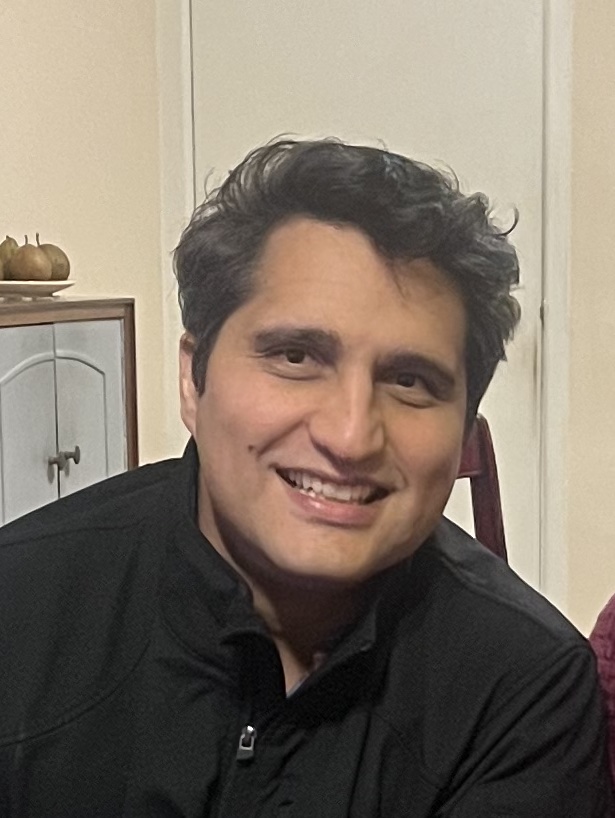
Software Developer & Tinkerer
Hey, I’m Francisco. I got hooked on technology back when the internet sounded like a modem handshake and you learned by breaking things and figuring out why. Since then I’ve worked on systems where failure wasn’t an option. These days I write code, help businesses with their tech, and still take things apart to see how they work.