
Views are my own. ArcRTC is still a work in progress, and I’d rather say that up front.
Most of my projects start the same way. I get curious about something small, I start pulling on it, and a few months later I look up and realize I’ve built something I never planned to build. ArcRTC is the best example of that so far.
It began with a simple question. How do you stream audio, and later video, as efficiently as possible? I wanted to know why some streams sound clean and others stutter, why one call holds up on a bad connection and another falls apart. So I started reading, then testing, then building. That curiosity goes back a long way. I was a big fan of Flash back in the day and did a lot of experimental coding with it, and video streaming was one of the things I couldn’t leave alone. Flash is long gone now, but plenty of what I learned tinkering with it still shapes how I think about streaming.
For years I’d also wanted to play with experimental protocols for streaming to TVs and everyday devices, the sort of thing Chromecast, AirPlay and the newer ATSC 3.0 broadcast standard do, and maybe one day run a server and a service that any device could stream from, whatever brand it is. I’d been turning that idea over since before AirPlay and Chromecast came along, and I’m sure I wasn’t the only one. Plenty of tinkerers were dreaming the same thing back then. It just never really left me.
At the same time I’d been working on a separate piece of software for high-quality audio and video streaming, and I’d been playing with it for a good while. The more I tuned it, the more I ran into the same wall. I could keep polishing the software all day, and it would only get me so far.
That’s when it clicked. Software matters, but the real difference is the architecture underneath it. You can’t out-code a bad design. When streaming goes wrong, it’s almost always because of how the pieces were put together, not how well any one of them was written. Get the architecture right and the software has room to shine. Get it wrong and no amount of clever code will save it.
The same goes for the hardware and infrastructure below it all. They matter just as much as the software. There was a stretch of years when I went into full hardware mode and barely wrote a line of code. I found that hardware has its own logic and its own patterns, almost like code of a different kind, and it fascinated me. I also learned that tweaking the operating system to make your hardware do what you want tends to end with a crashed computer. I don’t recommend it. Really, I don’t recommend it. But I’ll save that for another day.
Once I started looking at the architecture, I kept coming back to one thing: how do two points find each other and agree to talk securely before any audio or video moves at all? That first handshake is called signaling, and it matters more than most people realize.
Most real-time communication on the web today uses WebRTC, and for what it was built for, it does a fine job. Video calls in your browser, chat apps, that kind of thing. But the deeper I went, the more I found a gap. WebRTC was designed for the open web, and it leaves a lot of the signaling up to whoever builds on top of it. For everyday apps that’s fine. For critical infrastructure, where you need to know exactly who’s on the other end and you can’t afford surprises, it left me uneasy.
I wasn’t trying to replace WebRTC. The goal was simple. Secure signaling from one end to the other, and both sides synced up quickly, so the connection is trusted and ready almost the moment it starts.
I’ll be honest, I stumbled into it. I was sketching out how I’d want signaling to work if I were starting from scratch, and somewhere along the way that sketch turned into a protocol. That’s ArcRTC. Truth is, the seed goes back further than that. About fifteen years ago a friend and I spent hours talking about Gundam, dreaming up the kind of communication systems those mobile suits would need to stay linked up in the middle of chaos. It was just two geeks having fun. But when ArcRTC started taking shape, I caught myself thinking back to those conversations, and realizing it could do a lot more than I’d first imagined.
It has its own signaling layer instead of the usual WebRTC approach, and it’s built into Armoricore, the foundation I’ve been building for real-time communication and media. The media it carries is secured on the way, and the whole thing was designed from the start for places where a dropped or tampered connection isn’t just annoying, it’s a real problem. Think utilities, emergency services, industrial systems, and other critical infrastructure. The same idea carries over to telehealth, where a doctor and patient need a private, steady video link, to technicians checking equipment at a plant from miles away, and to sensors and cameras that need to report back securely. For the ordinary browser call, WebRTC is still the right tool, and ArcRTC can fall back to working alongside it.
Armoricore itself came about for a practical reason. I had a long list of ideas and projects I wanted to build, and every one of them needed a solid media foundation underneath. Nothing out there quite fit, so I thought, why not just build it myself? All those years of thinking about streaming to TVs and everyday devices went straight into it. Armoricore is meant to be the base layer for exactly that kind of work, the foundation you build streaming, calling and media services on top of, rather than one finished product. To be clear, though, Armoricore isn’t a CDN. A content delivery network is a different animal, and it takes serious infrastructure, thousands of servers spread around the world. Cloudflare and Akamai are the names most people know. Cloudflare is a strong contender, especially with its DNS and the way it builds security into its network. But I’ve always been a big fan of how Akamai does it, putting its servers deep inside internet providers’ own networks, as close to people as it can get. Armoricore does a different job. It’s the foundation for handling the media and the connections, not the global network that delivers content at scale.
Wanting my own foundation also comes from an old lesson. About ten years ago I built a set of sites designed to generate ad revenue, with code running behind them and a media piece tying it together, all on someone else’s stack. By most measures it went well. It made money, and it probably could have kept going. But once I really looked under the hood, the engineering was just wrong. I couldn’t put my name to something built that badly. It’s not in my DNA. Plenty of people build whole businesses around that kind of money, and good for them, but my heart was never in it. So I walked away.
And building it is only half the job. Every piece of infrastructure has to be maintained for years after it goes live, patched, updated, kept running at three in the morning when something breaks. Badly built code doesn’t get cheaper to look after. It gets worse every year, and somebody has to carry that. In our line of work we call it tech debt, and like any debt, the interest adds up. Ever since that ad project, I’ve wanted a secure media stack of my own, one I understand from top to bottom and can actually build on. The name comes from Armorica, the old name for Brittany, where my family line has its roots. Cynan, which I’ve written about before, comes from the same place, so the two felt like they belonged together.
ArcRTC is still in progress. The specification is written, parts of it are working, and parts are still being built and tested. I’d rather tell you that plainly than pretend it’s finished. Even as I write this, I can think of a dozen things I want to fix. But that’s how this kind of work goes. You build something, sit with it, play with it a bit, step away and relax, then come back and build some more. You can’t do it all in a couple of days. It just takes time. The work is part of Armoricore on the Fastcomcorp GitHub, so anyone curious can take a look. What’s on GitHub today is really just the foundation, the building blocks. There’s more we’ve built along the way that isn’t released yet, and it’ll come out when it’s ready. One of those is on the DNS side, but that’s a story for another post.
The lesson I keep coming back to is simple. The flashy part is rarely where the real work is. It’s the plumbing, the design decisions nobody sees, the handshake before anything happens. That’s where things hold up or fall apart.
I didn’t set out to build a protocol. I set out to understand why some streams sound better than others. But if there’s one thing years of this work have taught me, it’s that if you keep asking why long enough, you usually end up building the answer yourself.
I’ve also learned there are two ways to go about this kind of work. You can focus on the money and build projects around the business side, and there’s nothing wrong with that. For me, though, the goal for many years has been to master the art itself, and that takes time. The business side still matters, because there are things you can only do in tech and things you can only do in business, and you need both. But the knowledge comes first. Everything else gets built on top of it.
Deep knowledge is what produces the kind of technology that quietly makes the old way obsolete. It’s also what lets you build something to last, and lasting takes real mastery. In business you can throw money at a problem and hire plenty of people, but engineers of real caliber are getting harder and harder to find. Money can buy time on someone’s calendar. It can’t buy mastery. I’ll admit, when I started out I wanted to be a sort of MacGyver for computers. Give me a paperclip, a terminal and a bad connection, and I’d get it working. It probably didn’t help that I was hooked on Stargate SG-1, where the same actor went from MacGyver to stepping through a portal into other worlds. Walking through a Stargate is still on my bucket list, for the record. The funny thing is, the more I learn, the more there is to learn, and some days it’s a mountain of information. On those days I catch myself thinking I’d be just as happy as a farmer, out growing my crops. Then again, maybe that’s not so different. A good farmer learns the patterns, the seasons, the soil, what holds up and what doesn’t. That’s really all I’m doing too, just with servers instead of fields.
Maybe it’s in the blood. My family’s roots are near Mont-Saint-Michel, on the edge of Brittany, where monks spent centuries patiently learning, copying and protecting knowledge. I like to think I’m doing a version of that, just with code. Some days I feel like a bit of a digital monk, tucked away behind a screen, tending the infrastructure most people never see and keeping my little corner of cyberspace in good order. Programmers have always borrowed from that world anyway. We practice code katas, hold coding dojos and talk about the zen of a clean design. It’s the same idea in every case. You don’t master a craft in a weekend. You show up, put in the practice, and keep at it for years.
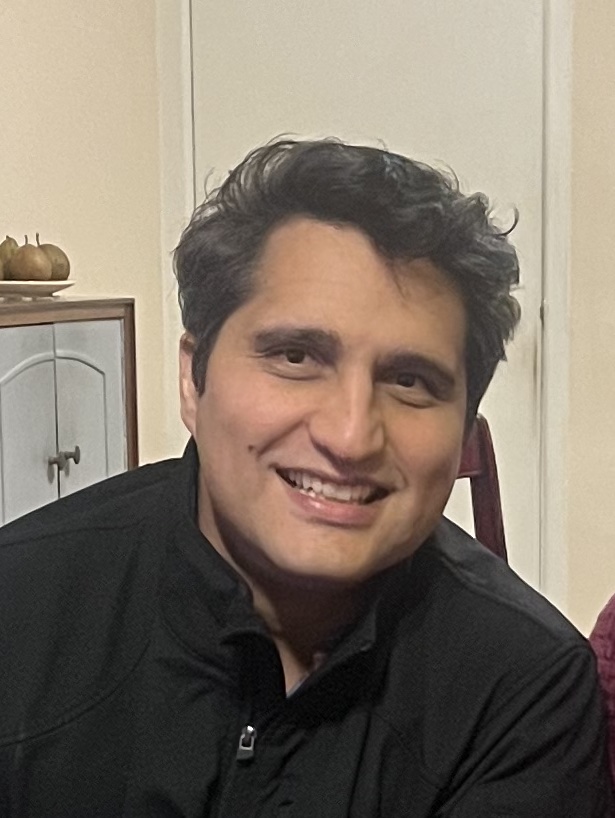
Software Developer & Tinkerer
Hey, I’m Francisco. I got hooked on technology back when the internet sounded like a modem handshake and you learned by breaking things and figuring out why. Since then I’ve worked on systems where failure wasn’t an option. These days I write code, help businesses with their tech, and still take things apart to see how they work.