
If you read my last post, you know I spent about twenty years chasing one problem. What I didn’t say is that the hardest thing I ever had to learn wasn’t in the code. It was learning how to run a business.
When you’re a tech person, you believe the best solution wins. Build it right, make it elegant, and people will line up. It took me years to accept that it doesn’t work that way. The best solution only wins if someone understands it, trusts you, and can afford it. That’s business. And for a long time, I wasn’t wired for it.
I chose computer engineering, not computer science or IT, for a reason. I didn’t just want to use computers or write programs for them. I wanted to understand how a chip actually thinks: where the hardware ends, where the software begins, and how patterns of electricity become logic.
I spent a lot of time in the university library, and the more I read, the more I realized the degree was only the beginning. One shelf led to another, and I ended up deep in nanotechnology and everything beyond it. The deeper I went, the more a computer looked like a living organism: a system of systems, all the way down. That fascination never left.
I’d seen that pattern before. Studying for my CCNA in high school, I started to see networks the same way: not a pile of cables and routers, but one connected system, a lot like a neural network. Once I saw it, I couldn’t unsee it.
In the end, I didn’t finish the computer engineering degree. My passions kept pulling me sideways, and I was teaching myself faster than any syllabus could. Meanwhile I watched startups take off around me. Sure, they had funding. I didn’t have much. I was paying my own way through college, which meant working the whole time, and money only stretches so far. What I had was curiosity and a lot of late nights.
Looking back, it was the right call for me. Over the years I’ve seen plenty of people wish they’d chosen differently, still paying off loans for a degree they don’t use. I don’t regret going, and I don’t regret leaving.
That’s not a knock on degrees. A good degree and good mentors can open doors and save you years. It depends on the person and the path. What matters most is finding what you’re passionate about, and having people around who encourage it. And if cybersecurity is your passion, look at the training from the SANS Institute. It’s worldclass.
If you’re a builder, you probably know this life. You lose track of time inside a problem. Dinner gets cold. A “quick fix” turns into three in the morning. You keep to yourself, not because you don’t like people, but because the problem in your head is louder than the room.
From the outside, it can look strange. People see you staring at a screen and think you’re wasting time. They don’t see that you’re holding a whole system in your head, and that if someone breaks your focus, it takes an hour to put it back together.
That focus is a gift. It’s how hard things get solved. But it comes with a cost. It’s easy to miss things that matter: people, rest, the world outside the screen. And it’s easy to believe that because you understand the technology, you understand everything around it. That last one cost me the most.
If you’re not technical, here’s something worth knowing. When someone says “it’s just a computer problem,” it almost never is.
Take something simple, like “the phones aren’t working.” To the person calling me, that’s one problem. To me, it could be any of a dozen: the internet line, the firewall, the router, a certificate that quietly expired, a server that ran out of memory overnight, a software update that changed one setting, or the phone provider having a bad day. Each one looks the same from the outside. Each one needs a different fix.
That’s the hidden part of this work. Every system sits on top of other systems, built by different people, at different times, often with no notes left behind. Fixing a problem means working out which layer is lying to you. Sometimes that takes five minutes. Sometimes it takes five days, and the fix is one line.
Think about the last time you got locked out of an account. You forgot the password, so you reset it. The reset code went to an old email address. The two-factor code went to a phone you replaced last year. The help line wanted you to log in to prove who you are. One small problem turned into an afternoon, because each fix depended on something else that was also broken.
Or think about a software update that “fixed” your computer overnight. The next morning, the printer doesn’t work, one app won’t open, and your email looks different. One change, several things broken, and none of them obviously connected.
Now scale that up. In July 2024, a single faulty update from the security company CrowdStrike crashed about 8.5 million Windows computers around the world. Thousands of flights were grounded. Hospitals delayed procedures. Banks and broadcasters went down. The company pulled the bad update within about an hour and a half, but the recovery took days, because many machines had to be fixed one at a time, by hand.
That’s the world tinkerers live in. Everything is connected to everything else, and a problem rarely stays where it started.
Here’s one example most people never think about: the little padlock next to a website address. Behind it are two jobs that look simple and aren’t.
The certificate. It proves a site is who it says it is. Setting one up properly means getting the whole chain of trust right, not just your own certificate, or some devices will quietly refuse to connect. And certificates expire. Since March 2026, a public certificate can last at most 200 days. That drops to 100 days in 2027 and 47 days in 2029, under an industry decision called Ballot SC-081v3. Forget to renew one and a business goes dark with a scary warning page, usually on a Friday night.
The ciphers. These are the methods used to scramble the data. You have to choose which ones a server will accept, and it’s a balancing act. Too loose, and you allow old methods that attackers already know how to break. Too strict, and older devices, like the warehouse scanner nobody has replaced, can’t connect at all. You pick strong, modern options, switch off the retired ones, and test what still works.
What makes this hard isn’t the settings. It’s time. Every choice has a shelf life. A cipher that’s strong today may be weak in five years. Attackers can even record encrypted traffic now and wait until they can break it later, a threat known as harvest now, decrypt later. That’s why browsers have started using new post-quantum key exchange, built to hold up even against future quantum computers.
That’s the part of a technical mind people rarely see. We’re not just asking, “Does it work?” We’re asking, “Will it still be safe in three years, and what breaks when it changes?” Reasoning across time like that is a skill. It’s also, as it turns out, a very good habit for running a business.
In March 2024, a Microsoft engineer named Andres Freund was testing database performance and noticed something small. Logging in to his Linux machine over SSH was taking about half a second longer than it should. Most people would have shrugged it off. He didn’t. He took it apart.
What he found was a backdoor hidden inside XZ Utils, a compression tool that sits quietly inside a huge number of Linux systems. Someone using the name “Jia Tan” had spent roughly two years contributing helpful code to the project, earning the maintainers’ trust, and eventually gaining the rights to publish new versions. Then they slipped in a backdoor that could have opened a secret door into servers around the world. It was rated 10 out of 10 for severity, the highest score there is.
It was caught early, before it spread to most of the world’s servers, because one person refused to accept “good enough” and followed a half-second all the way down.
That story has everything I’ve been describing. The attack ran on patience and trust, built up over years. The defense was curiosity: the instinct to ask why something feels off and keep pulling the thread. There’s a business lesson in it too. Know who you depend on, and pay attention to the small things that don’t add up.
So when a tinkerer goes quiet and stares at a screen for an hour, they’re not stuck. They’re tracing a problem through layers you can’t see. It really is a different world, and most of it happens in our heads.
In 2011, I started Fastcomcorp. I thought the hard part would be the technology. It wasn’t. The technology was the part I was good at. Everything else, I had to learn the hard way. Here’s what changed in how I think:
None of this came naturally. Some of it I learned by losing money. Some of it I learned by losing time I’ll never get back. All of it made me better at what I do.
Becoming business-minded didn’t mean leaving the tinkerer behind. The same instincts still work. They’re just pointed somewhere new.
I still take things apart. Only now it’s a client’s workflow, a sales process, or the way money moves through a company. Find where it breaks, understand why, fix it. A business is a system too. It just has more people in it, and they don’t come with documentation.
I still think in systems. When something goes wrong, I don’t look for someone to blame. I look for the part of the process that let it happen.
I still build for the love of it, too. One recent example: I personally ported the core of GNU ZRTP, the protocol behind encrypted voice calls, from C++ to Rust. ZRTP was designed by Phil Zimmermann, the creator of PGP, and Werner Dittmann wrote the original C++ library. Years ago, back in the Zfone days, Phil was kind enough to answer my long list of questions. Giving something back felt overdue.
Why Rust? Most serious security bugs in older C and C++ code come from memory mistakes: a buffer read too far, a pointer used after it’s freed. Rust’s design rules out most of those by default. For code whose whole job is keeping a phone call private, that matters. I also added a bridge so existing C and C++ phone systems can use the Rust engine without being rewritten. You can see the work, released under the same Apache 2.0 licence as the original, on GitHub.
It’s the same lesson as the XZ story, from the other side. Open source runs on trust and on people willing to do the unglamorous work. If you depend on it, and almost every business does, it’s worth giving something back.
And I still don’t quit. Twenty years on one problem taught me that persistence beats talent most days. That’s just as true in business as it is in code.
For fellow tinkerers: the growth it takes
Looking back, I went through a few stages. I didn’t know they had names at the time. If you’re on this road, maybe this saves you a few years.
You don’t graduate from one stage and leave it behind. Some weeks I’m all four before lunch. But knowing which stage you’re in tells you what to learn next.
If you’re a technical person thinking about starting something, here’s the honest version. Your skills will get you in the door, but they won’t keep the lights on. Everything else in this post is what does.
You don’t have to stop being who you are. You just have to learn a second language. Mine took about fifteen years, and I’m still picking up new words. Next time, I’ll get into what all this looks like day to day: how I balance building with running a business, and why it’s still a work in progress.
Software Developer & Tinkerer
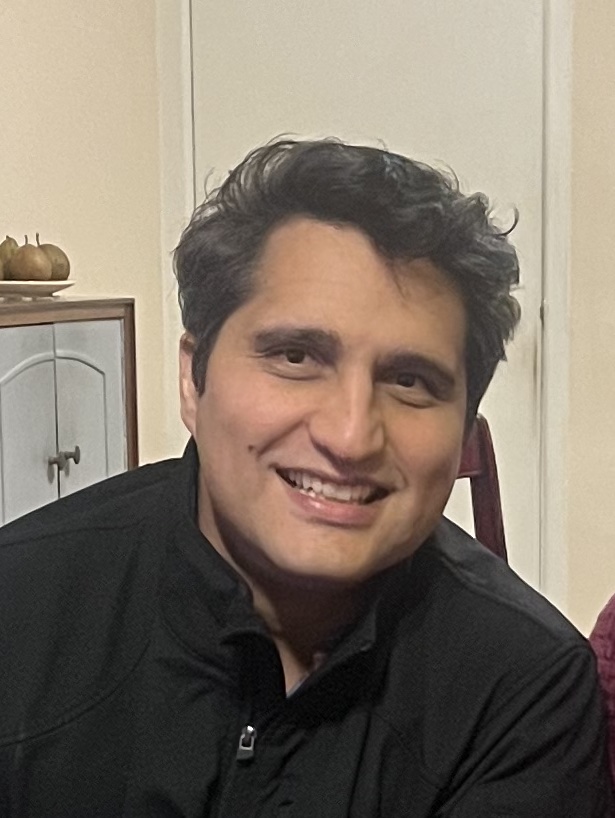
Hey, I’m Francisco. I got hooked on technology back when the internet sounded like a modem handshake and you learned by breaking things and figuring out why. Since then I’ve worked on systems where failure wasn’t an option. These days I write code, help businesses with their tech, and still take things apart to see how they work.