
Views are my own. Cynan is still a work in progress, and I’ll say so plainly throughout.
I think most of the engineers I respect started the same way. Somebody handed them something that worked, and they couldn’t leave it alone.
For me it was a modem and, a little later, a Nokia phone. I’d sit there changing settings I had no business changing, just to see what happened. Then I found out you could punch certain codes into that Nokia and the phone company would answer back. A menu would show up, or some bit of information about the network, or a feature would switch on. I remember thinking, hang on, who’s on the other end of this? Something out there was listening for those codes and deciding what to do with them, and I wanted to know what it was.
Then came the Razr, which I loved, and the BlackBerry, which I loved even more and honestly still do. Carrying the two of them felt like the height of technology. The BlackBerry was the one that really got me thinking, because it was built around keeping your messages secure, back when hardly anyone else cared. That question of who’s on the other end never really went away. Over the years I read everything I could get my hands on about how phone networks work, how a call actually gets from one person to another, and what happens to it along the way. Most of that reading happened late at night, and most of it I didn’t fully understand the first time around.
At some point the curiosity turned into something more serious. Like a lot of people, I read the reporting that came out of the Snowden disclosures, and about how the Patriot Act widened what could be collected. What struck me wasn’t any one program. It was the scale of it. The phone network is a lot bigger, and a lot more connected, than most people imagine, and once you understand how it’s built you realize how many places a call or a text can be seen.
I want to be fair about this, because it’s easy to get preachy. I understand why the country needs surveillance capabilities. There are threats out there most of us will never hear about, and there are people in the U.S. government who spend their careers quietly keeping us safe from them. I respect that work. I also believe ordinary people have a right to privacy. I don’t think those two ideas cancel each other out. I think a healthy country holds both.
And honestly, the bigger risk for most folks isn’t their own government. It’s everybody else.
Think about the code your bank texts you when you log in. Most people assume that message goes straight from the bank to their phone and nobody else sees it. That isn’t always true. An ordinary text message is a lot more like a postcard than a sealed letter. It passes through plenty of hands on the way, and it was never really designed to keep secrets. This isn’t news to security folks. They’ve been warning for years that a text is one of the weaker ways to get a login code, and that an authenticator app or a passkey is a safer bet. Yet plenty of banks still send those codes by text, and most of us still trust them.
A lot of the signaling that still holds the phone network together was designed decades ago, when the only people connected to it were phone companies that trusted each other. That trust doesn’t hold up today, and there are well-documented ways for the wrong people to redirect texts and calls. Then there’s the SIM swap, where somebody talks a carrier into moving your number onto their phone. Once they have your number, they have your bank codes too.
It isn’t only small-time crooks either. The Salt Typhoon intrusions showed that state-backed hackers had gotten deep inside major American telecom networks. If they can get in there, the idea that a phone call is private by default starts to look a bit optimistic.
I read a lot about all this over the years, the signaling weaknesses, the attacks on cell phones, how they work and why they keep working. At some point I realized I’d come to understand the attacks pretty well, and the natural next question was what to do with that. For me the answer was to turn it around. If I understood how these networks get broken into, I could use that to help secure them, and share what I’d learned along the way. That’s really what this whole project was about, building my own skills and putting them to good use. And in my experience the only way to really understand a system is to build one.
The piece of equipment that sits at the edge of a phone network, deciding which calls come in, which go out, and how they’re protected on the way, is called a session border controller, or SBC. Most businesses never think about theirs. It just sits in a rack somewhere doing its job, the way all good infrastructure does.
I ended up building two pieces of software. The first is Cynan SBC, my own session border controller. The second is Cynan IMS Core, which goes a level deeper. The IMS core is the heart of a modern mobile network, the part that actually sets up your calls and carries your texts over 4G and 5G. The name comes from Brittany. My family line has roots in Brittany, and in Breton legend, Cynan is the man who founded it. It seemed right to name something built to protect after someone who built a home and defended it.
They’re separate projects, but they were made to work together. I’ll admit I didn’t start out knowing that. When I began, I assumed there was one piece of software running the whole show. I’d heard of SBCs for years, but IMS was a different world, and good material on it is surprisingly hard to come by. Most of it lives in dense standards documents and inside the carriers themselves. So I had to piece it together the hard way, and slowly figure out that a mobile network is really a lot of separate parts, each with its own job, talking to each other. Some days it felt less like learning and more like being dropped into a family reunion where everybody speaks in acronyms and nobody tells you who’s related to whom. I’ll be honest, it was a piece of work.
At first it was all purely a learning exercise. I wanted to see how a call is set up and torn down, how the audio actually travels, and where the weak points are. I was also curious about where AI fits into all of this. Carriers are starting to use it to route traffic, spot fraud and run their networks, and attackers are using it too. I wanted to understand, from the inside, how AI would actually interact with a phone network, and what that means for keeping it secure. Somewhere along the way it turned into something more serious than I’d planned.
I wrote it in Rust and Elixir, and the choice wasn’t about being fashionable. A lot of telecom software is written in older languages where one small memory mistake can turn into a security hole, and the industry has paid for that again and again. Rust catches a whole class of those mistakes before the code ever runs. Elixir handles the other half of the problem, which is keeping thousands of calls going at once and recovering on its own when something falls over.
Rust also has strong opinions about how you should write your code, and it is not shy about sharing them. There were late nights when I was fairly sure the compiler and I were no longer on speaking terms. But every argument it won was a bug that never made it out the door. AI tools helped speed some of this along, though they had their own opinions too, and more than once I had to set them straight. The real heroes, though, were the rubber duck and the Buc-ee’s beaver on my desk. I did a lot of complaining during this project, and they sat through every word of it and helped me put the code back together. Neither of them has asked for credit yet.
There’s a nice bit of history there too. Elixir runs on technology Ericsson built back in the 1980s specifically to keep telephone switches running. So in a way, I’m taking telecom’s own tools and bringing them back home to where they started. Put the two together and you get the speed and safety of Rust with the staying power Ericsson built for phone switches. But the real reason is simpler than that. I wanted to run my own stack, top to bottom, and know for certain it would stand up to an attack. If you go through my code you’ll notice I got a little obsessive about security in places. That’s all right. It’s just how I think.
I’ll be straight about this. Both Cynan projects are still being built. Cynan has been openly released, so you don’t have to take my word for any of this. The code is up on the Fastcomcorp GitHub for anyone who wants to have a look. Parts of it work well, other parts are still experimental, and I’d rather tell you that than oversell it. Getting the SBC and the IMS core working smoothly together is the next big step.
If I had to sum up what I was really after, it was hardening. Phone networks are a target for nation-state attackers now, people who aren’t after one person’s bank code but want to get inside a carrier or take parts of it down. I wanted to build something that would stand up to that kind of pressure. Telecom isn’t just phones. Banks, hospitals, ports, power companies and every small business in between run on it, so when a carrier goes down, the economy feels it. To my mind, keeping these networks standing is an economic issue as much as a security one.
The project also taught me something I didn’t expect, which is how much the hardware matters. Building software like this made me think hard about what chips it would actually run on, and where those chips come from. Right now far too much of the equipment underneath our networks depends on supply chains running through China. I see that as a real supply chain risk. Secure software only goes so far if the hardware under it isn’t ours, so I’d like to see more of it designed and made here at home. What I’ve learned so far is that security on a phone network is never one thing. It’s the signaling, the media, the hardware, the people running the equipment, and the small business on the other end of the line that never got around to updating anything. Pull on any one thread and you find the rest.
That kid with the Nokia had no idea where those codes would lead. I still don’t fully know, if I’m honest. But I do know that most people trust their phone far more than they should, not because they’re careless, but because nobody ever showed them how it works. If building this helps make our networks a little harder to knock over, and helps a few more people understand what’s happening on the other end of the line, then all those late nights of reading were worth it.
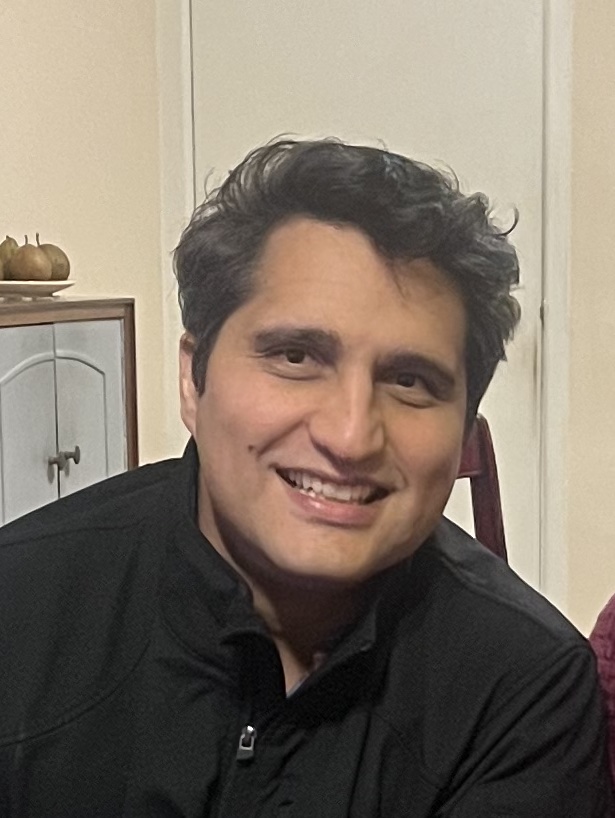
Software Developer & Tinkerer
Hey, I’m Francisco. I got hooked on technology back when the internet sounded like a modem handshake and you learned by breaking things and figuring out why. Since then I’ve worked on systems where failure wasn’t an option. These days I write code, help businesses with their tech, and still take things apart to see how they work.