
Views are my own.
Some of my earliest memories are of mountain roads. Narrow, winding, and usually dusty, climbing up through the highlands of Chiapas in the south of Mexico. My parents were missionaries there, working with the indigenous communities around Comitán and the villages up in the hills. My father’s work was teaching pastors, training local men to lead and care for their own people. I was just a kid along for the ride, or so I thought.
I’ve written a fair bit lately about building things, about foundations, and about the values that hold a country together. I realized I’ve never really said where a lot of that comes from. So this one is a bit more personal.
When you’re five or eight years old, you don’t think of yourself as learning anything. You’re just looking around. But I saw things up in those mountains that stuck with me for the rest of my life.
This was the early 1990s. I was there from the age of four until 1995, so I was still around when Chiapas made world headlines in 1994. It was one of the poorest states in Mexico, and the indigenous villages were the poorest corner of it. The good land in the valleys mostly belonged to big ranches and plantations. The families we visited farmed small, steep plots up in the hills, or worked on land that wasn’t theirs. Coffee was what kept many of them going, and when coffee prices collapsed around 1989, a lot of them were hit hard. Electricity, running water and a doctor nearby were luxuries plenty of those villages simply didn’t have.
My dad would take the whole family out to those places, my mom, my sister and me. Sometimes the road just ran out and we walked the rest of the way, along muddy trails, past cornfields clinging to the hillsides, with the mist still sitting in the pines. You’d come around a bend and there’d be a cluster of houses made of wood and adobe, smoke drifting out from a cooking fire, chickens underfoot, and kids running out to see who had come up the trail.
I saw families living in houses with dirt floors and not much else. I saw what it really means to be poor, not the version you see in a fundraising video, but the everyday kind. Kids my age drinking coffee, not because it was a treat, but because there wasn’t enough milk to go around. Coffee’s good, don’t get me wrong, I still drink my share of it. But when you understand why a little kid has a cup of it in his hands, it changes how you see your own breakfast.
And here’s the part I’ve never forgotten. A lot of those people were happy. Not happy in spite of everything in some brave, put-on way. Genuinely, deeply content. They laughed, they sang in church, they shared what little they had with a missionary kid who showed up in their village. They had something that didn’t depend on what was in the cupboard.
I saw that proven when the uprising came. I remember hearing gunshots, and families coming down from the villages because there was no food. And I remember the other side of it too. When it wasn’t safe for my parents to get to the store, it was often those same neighbors who showed up at our door with something to eat. People with almost nothing, sharing it anyway. I’ve never forgotten that.
Growing up there, I picked up the indigenous language of the region well enough to speak it fluently. I’ll confess I’ve lost most of it since, which is a shame. But learning it taught me something too. When you speak to people in their own language, the walls come down fast. You stop being a visitor and start being a neighbor.
Not everything was mountain roads, mind you. I went to La Salle, a private Catholic school, which made for an interesting mix for a Protestant missionary kid, and I’m better for it. And after church on Sundays, we’d head to Taco Loco, which happened to be owned by a member of our congregation. Fellowship has never tasted so good. To this day I’m not sure I’ve had a better taco anywhere, and believe me, I’ve done my research. It took a good long while for a proper taco to find its way to Mobile, and with all due respect to my neighbors, I still think the best Mexican food this side of the border is in Texas.
It took me years to understand what my father was doing. From a kid’s point of view, he was just going to meetings and teaching classes. Looking back, he was doing something a lot like what I try to do in my own work today, only far more important.
He wasn’t trying to make those churches depend on him. He was training local pastors so they could lead their own people, in their own language, long after he was gone. That’s the best kind of infrastructure there is. You don’t build it so people need you forever. You build it so it keeps working when you walk away.
I didn’t have the words for it then, but I was watching a man build on a foundation that would outlast him. That idea has followed me into everything I’ve done since.
Growing up the way I did, I’ve spent time in a lot of different churches. Baptist churches, where the Bible was taken seriously and nobody was getting baptized without understanding why. Methodist churches, where the hymns were good and faith meant rolling up your sleeves and serving your neighbors. Pentecostal churches, the Assemblies of God and the Church of God, where worship was loud, joyful and full of life, and nobody minded if you raised your hands. And plenty of non-denominational churches that just wanted to get back to the basics.
People sometimes ask me which one I am. Honestly, I’m a bit of all of them. Each of those traditions taught me something, and I’m grateful for every one.
But after seeing faith in mountain villages and in American suburbs, in tiny chapels with dirt floors and in buildings with sound systems that cost more than a house, I’ve come to care a lot less about the labels on the door. What matters is what’s underneath. Faith in Jesus Christ. Trust in Scripture. A real, personal relationship with God. And a life that shows it, in how you treat people and how you do your work.
The churches I saw in those mountains had almost nothing. No fancy building, no budget, sometimes not even enough chairs. But it had the essentials, and that turned out to be plenty.
There’s a parable Jesus told that I think about more than almost any other. Two men build houses. One builds on sand, and when the storm comes, the house falls with a great crash. The other builds on rock, and when the same storm hits, the house stands.
“Therefore whosoever heareth these sayings of mine, and doeth them, I will liken him unto a wise man, which built his house upon a rock.” Matthew 7:24 (KJV)
As someone who builds infrastructure for a living, that one hits close to home. I’ve seen what happens to systems built on sand. They look fine on a sunny day, and then the first real storm takes them down. I’ve also seen what holds. It’s never the flashiest thing. It’s the thing with the right foundation.
That’s what faith is for me. It’s the rock. It’s why I care about keeping my word, about doing honest work, about treating the small business owner and the big client the same way. It’s why I try to build things that will still be standing when I’m not around to look after them. And on the nights when a network goes down or system and nothing is going right, it’s what keeps me steady. I’ll admit I’ve said a few prayers over a server. I’m fairly sure I’m not the only one.
I don’t write about my faith to preach at anybody. People come to these things in their own way and their own time, and I respect that. I’m writing about it because it would be dishonest to talk about foundations and leave out the one everything else rests on.
For me, faith isn’t just a set of good values. It’s about a person. I believe Jesus Christ is who He said He is, that He died for our sins and rose again, and that His grace is offered to anyone, the family on the mountainside and the engineer at the server rack alike. I didn’t earn it, and I can’t. That’s the rock I stand on.
Those mountains taught me that joy doesn’t come from having a lot. My father taught me that the best work is the kind that keeps going after you’ve left. And the many churches I’ve sat in taught me that what we share matters far more than what divides us.
I still think about those kids with their cups of coffee. I hope they’re grown now, with kids of their own and plenty of milk in the fridge. And I hope somebody, somewhere, is still climbing those mountain roads, building on the rock.
God bless.
Software Developer & Tinkerer
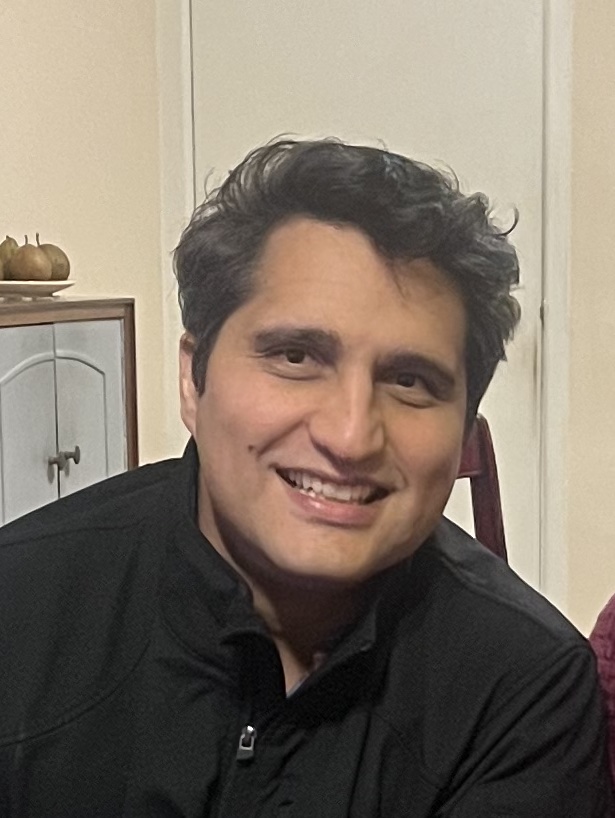
Hey, I’m Francisco. I got hooked on technology back when the internet sounded like a modem handshake and you learned by breaking things and figuring out why. Since then I’ve worked on systems where failure wasn’t an option. These days I write code, help businesses with their tech, and still take things apart to see how they work.