
Views are my own.
If you walk through Valparaíso, sooner or later you’ll pass under the Arco Británico. The British community gave it to the city in 1910, for Chile’s hundredth birthday. Most people stroll right past it on their way somewhere else. I always slow down. To me it isn’t just a monument. It’s a thank you note written in stone, from people who crossed an ocean, built something, and wanted to leave a mark of respect for the country that let them.
I’m not the only one who’s slowed down there. When Queen Elizabeth II came to Chile in 1968, she made a point of visiting the arch. Students from the Mackay School lined up as an honor guard to greet her, and the crowds were so thick and so excited that they pushed right past the police barriers. That tells you something. It wasn’t just the British community that cared about that arch. Valparaíso did too.
I spent five years in Chile, and I’ve come back to the States carrying a lot of affection for the place and its people. So this one is mostly for my friends down there. Consider it a reminder of a story you already know, told by someone who loves it.
Chile opened its ports to free trade in 1811, and in the decades after, laws in 1824 and 1845 invited settlers from Europe to come and put down roots. A good many of them came from Britain. Over 50,000 British immigrants settled in Chile between 1840 and the First World War, mostly in Valparaíso, Concepción and Punta Arenas.
They weren’t tourists. They were merchants, engineers, miners and seamen. They built railways and warehouses, ran shipping lines, and helped turn Valparaíso into one of the busiest ports on the Pacific. At one point something like 70% of Chile’s wheat was headed to Britain, and coal, iron and machinery came back the other way. In the north, during the saltpeter boom, you’d find them in Iquique and Pisagua too.
And they brought a bit of home with them. Valparaíso had cricket clubs, rowing clubs and amateur theater. British sailors kicked a football around on the hills above the harbor, which is about as good a way as any to make friends in a new country. They didn’t wall themselves off. They married into Chilean families, learned the language, and over a few generations became something new. Today there are hundreds of thousands of Chileans with a British name somewhere in the family tree, and most of them would tell you they’re Chilean first.
Britain wasn’t the only place sending people. Between 1840 and 1940, somewhere around 20,000 to 25,000 French immigrants came to Chile, and plenty of them were Bretons.
Here’s the part I find quietly delightful. The Bretons and the British were never really strangers. Brittany was settled centuries ago by Britons who crossed the Channel, and the name itself comes from them. The Bretons, the Welsh, the Cornish, the Scots and the Irish all share the same Celtic roots, the same love of the sea, and a fair number of the same saints. So when a Breton and a Welshman bumped into each other on a dock in Valparaíso, it wasn’t so much meeting a foreigner as running into a distant cousin at a family reunion on the wrong side of the world.
I suspect that’s part of why it worked. People who share old roots tend to trust each other a little faster, and trust is what gets things built.
It’s easy to look at the old photographs and think of it as a story about trade and money. It was partly that, of course. But what they left behind runs a lot deeper than that.
Start with the schools. The Mackay School opened in Valparaíso in 1857, and before long Chilean families were sending their children there alongside the British ones. One of its teachers was Thomas Somerscales, who became one of the finest painters of the Chilean sea. Schools like that taught more than English. They taught a way of carrying yourself.
Then there’s football. The British brought the game to Chile, and the students and old boys of the Mackay School helped spread it. Santiago Wanderers, founded in 1892 by Chileans who’d caught the bug from their British neighbors, is the oldest club in the country still playing. Everton in Viña del Mar still goes by an English name to this day. Every Sunday that a Chilean kid kicks a ball around a dusty field, a little bit of that story is still alive.
And there are the railways. When Chile set out to connect Valparaíso with Santiago, British engineers and British capital helped get it done, after years of delays. A railway isn’t glamorous, but it’s the kind of infrastructure that quietly changes everything around it. It moves people, goods and ideas, and it ties a country together.
You can still feel it in the city itself. For most of the nineteenth century Valparaíso was the center of it all, the port where the world arrived in Chile, and the British stamp is still there in the old banks, the churches on the hills, the trading houses and the very feel of the port. Even the Navy still carries British traditions. Some things, once they’re woven into a place, just stay.
Underneath all of that, they left habits. Keeping your word in business. Building things to last instead of building them cheap. Showing up on time. Playing by the same rules as everyone else, on the field and off it. Those habits mixed with the Chilean character, which already had plenty of grit and warmth of its own, and the result was a country that for a long time had a reputation across Latin America for being stable, honest and serious about its institutions.
That reputation wasn’t an accident. It was built, stick by stick, by Chileans and newcomers working side by side. And it still pays off. Chile has signed trade agreements with more countries than almost anyone, and plenty of companies run their Latin American business out of Santiago for one simple reason: they trust the place. When people in London, New York or Tokyo want a foothold in the region, Chile is very often the first call. That kind of trust took generations to earn, and it’s worth protecting.
The same goes for the digital side of things. In 2024 Chile became the first country in Latin America to set up a national cybersecurity agency with a proper legal framework behind it, and it has quietly become one of the region’s leading places for cybersecurity. When you’re the country the rest of the region does business through, protecting the networks underneath isn’t optional. It’s no coincidence that someone in my line of work found plenty to do down there.
I’m not writing this to tell anybody how to run their country. Chileans are perfectly capable of sorting out their own affairs, and they’ve done it through harder times than most.
But I’ll say this as a friend. Every country goes through seasons when people start to forget what the foundations were for. Trust wears thin. Folks look for someone to blame instead of something to fix. I’ve watched it happen in the United States and in the United Kingdom, and I’d be surprised if Chile were immune.
When that happens, it’s worth walking back down to the harbor and standing under that arch for a minute. It was put there by people who believed that if you work hard, keep your word, respect the law and treat your neighbors fairly, a country will be good to you, and you’ll want to say thank you. That’s not a British idea or a Breton idea or a Chilean idea. It’s just a good one, and it’s still true.
So here’s my encouragement, for whatever it’s worth from a friend who’s no longer down the street. Go back to the fundamentals. Spend within your means, the way any good family or small business has to. Hold everyone to the same law. Get the classrooms back to teaching children how to think, not what to think, and keep ideology from any direction out of them. Reward people who build things and keep their word. None of that is complicated. It’s just hard, and it takes patience.
Chile has rebuilt before, more than once, after earthquakes, hard times and hard years. The people who built Valparaíso didn’t wait for perfect conditions. They picked up the next stone and set it in place. The same thing that worked then will work now.
The ties between Chile, Britain and the rest of us who love both run deeper than most people realize. They go back through Valparaíso’s docks, through the railways running inland, and much further back, through little Celtic fishing towns on the other side of the world.
I’ve had the privilege of sitting at a lot of tables in Chile, and I still think about the people I met there. I’ve always believed a man should be known by what he builds, not by what’s said about him over someone else’s coffee. Judge me by the work. To those of you reading this, and you know who you are, I’m still building, and the door is still open. Let’s find something worth building together. And I’ll be honest, I miss that little coffee spot near La Moneda. Save me a cup.
One last thing for my Chilean friends. I know the neighbors across the Andes can be a handful, especially on match day and whenever the asado argument starts. Hang in there. You’re not alone. Judging by what I read online, the British feel exactly the same way.
Un abrazo.
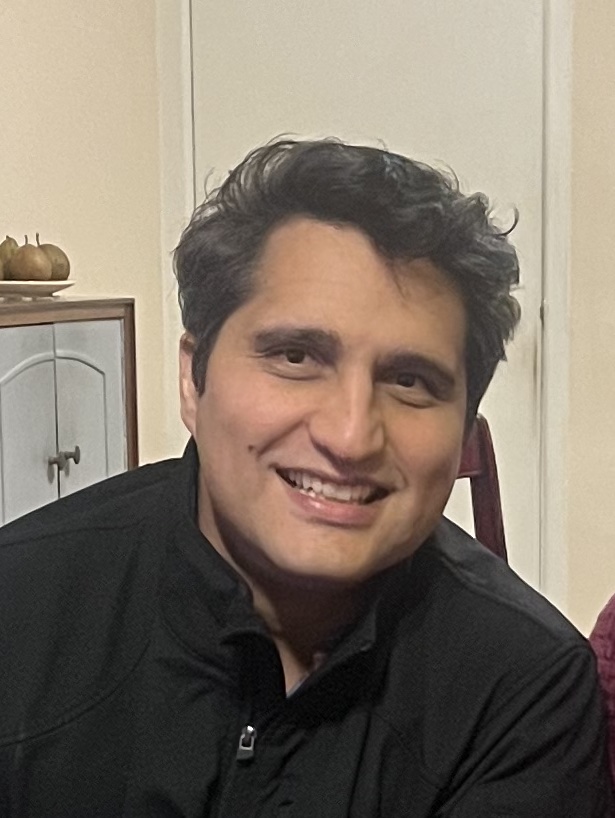
Software Developer & Tinkerer
Hey, I’m Francisco. I got hooked on technology back when the internet sounded like a modem handshake and you learned by breaking things and figuring out why. Since then I’ve worked on systems where failure wasn’t an option. These days I write code, help businesses with their tech, and still take things apart to see how they work.